Nissan Rogue, Altima, and Murano models suffer accelerated front lower control arm bushing tear, strut bearing binding, and coil spring fracture from deep pothole impacts and calcium chloride brine along Route 18 in Abington, MA. Professional inspection targets restoring steering wheel returnability, eliminating low-speed clunks over frost heaves, and stopping premature tire edge cupping.
Route 18 Pothole Damage
Winter freeze-thaw cycles along Brockton Ave and Route 123 create severe asphalt shear, forcing Nissan Rogue and Altima front suspension assemblies to absorb repeated high-velocity impact loads. Salt slush accumulation accelerates galvanic corrosion on unpainted steel coil spring tails and front subframe mounting bushings, causing component fatigue and alignment slip in under 35,000 miles.
System Breakdown Diagnostics

Severe winter driving conditions in Plymouth County compromise Nissan strut assemblies and lower control arm rubber bushings through chemical oxidation and mechanical stress requiring Nissan vehicle repair.
| Failure Parameter | Observed Field Specification |
| Primary Symptom | Harsh popping or clunking sound when turning the steering wheel at low speeds, accompanied by violent front-end vibration over bumps. |
| Target Component | Front strut MacPherson assemblies, upper strut mount bearings, lower control arm hydro-bushings, and sway bar end links. |
| Specialized Tooling | Electronic chassis ears, digital alignment rack, coil spring compressor, ball joint separator, dial indicator with magnetic base. |
| Local/Environmental Stressor | Abington road salt brine combined with severe frost heave impacts on Route 18 and Route 123. |
| High-Risk Run / High-Risk Profile | Nissan Rogue, Altima, and Murano commuters traversing severe winter road conditions daily. |
Targeting these diagnostic indicators prevents catastrophic strut rod shearing, tire blowouts, and severe secondary steering rack housing damage.
Mechanical Degradation Sequence
Under normal road conditions, the MacPherson strut assembly dampens vertical wheel motion while allowing the front wheel knuckle to pivot smoothly on the upper strut mount bearing and lower ball joint.
Brine solutions deployed across Abington roadways seep past the upper strut tower dust caps and lower control arm hydro-bushing seals. Salt deposits dry into abrasive crystals inside the upper ball-bearing race, locking the bearing plates. When the driver turns the steering wheel, the locked bearing prevents the strut shaft from rotating freely, transferring extreme torsional twisting force directly into the tempered coil spring. The spring winds up under tension and snaps violently at its lower perch—or rips the rubber vulcanization away from the lower control arm steel sleeve.
Master Tech Diagnostic Verdict: “When a Rogue or Altima comes into our Abington shop with a severe popped spring or a heavy steering drift, nine times out of ten the driver assumes they just need an alignment. We get it on the hoist, pull the wheel, and find the upper strut bearing completely frozen with rust scale, forcing the coil spring to twist itself until the bottom coil breaks right off in the perch.”
Master Tech Warning: Nissan lower control arms feature fluid-filled hydro-bushings in the rear mounting position. Pothole strikes along Route 18 rupture these internal fluid chambers, causing immediate fluid leakage, rapid caster loss, and severe inner tire edge wear within 1,000 miles.
Shop Floor Testing Workflow
Catching suspension component fatigue before structural failure occurs requires systematic load testing and optical alignment checks.
1.Under-Car Chassis Ear Inspection:Pinpoint transient creaks and popping noises.
Attach wireless electronic chassis ear clamps to lower control arm brackets, sway bar links, and upper strut housings. Road test over rough asphalt along Brockton Ave to isolate exact noise frequencies.
2.Unloaded Ball Joint & Bushing Pry Test:Check for rubber separation and ball joint play.
Raise vehicle on two-post lift to unload suspension. Use a pry bar to apply leverage against lower control arm rear hydro-bushings and ball joints, verifying deflection does not exceed 1.5mm factory limits.
3.Upper Tower Bearing Rotation Test:Inspect for binding or torsional coil wind-up.
Place front tires on turn plates with full vehicle weight loaded. Rotate steering wheel lock-to-lock while holding the coil spring to feel for binding, notches, or unnatural spring rotation.
4.Precision Four-Wheel Alignment Audit:Restore camber, caster, and toe specifications.
Mount optical targets and execute rolling runout compensation. Adjust front toe and subframe position to factory specifications, torquing lower control arm pinch bolts to 110Nm (81lb-ft).
Precision Abington Service
Driving on torn control arm bushings or binding strut mounts compromises emergency braking control and rapidly destroys expensive tires. Independent agile service centers replace worn suspension components and perform computer-calibrated alignments without dealership markup or week-long backlogs through routine preventive maintenance.
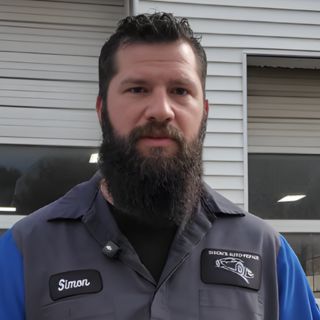
Trust Simon’s Automotive Service Center at 740 Brockton Ave, Abington, MA 02351 for thorough suspension testing, strut replacement, and precision four-wheel alignments tailored to New England roads. Call (781) 857-2446 to schedule your diagnostic inspection today.
Frequently Asked Questions
Does road salt in Abington ruin Nissan brake pads?
Yes. Road salt and liquid magnesium chloride accelerate galvanic corrosion on slide pins and steel backing plates. This locks caliper movement, causing severe outer pad drag, uneven friction wear, and premature pad delamination on Nissan crossovers during winter months.
Can frozen slide pins cause brake pedal pulsation?
Yes. Seized caliper slide pins prevent equal clamping force across the rotor surface. The angled pad contact creates irregular heat distribution and uneven thickness variations across the cast-iron rotor, resulting in distinct pedal pulsation and steering wheel vibration during stopping.
Should Nissan rear rotors be replaced with new pads?
Yes. New brake friction pads require an entirely smooth, rust-free rotor face to establish a uniform friction layer. Installing fresh pads onto pitted, salt-corroded rotors causes immediate pad scoring, excessive noise, and accelerated wear across the entire assembly.
Why do Nissan rear brakes squeal in cold weather?
Cold sub-zero temperatures paired with flash rust formation on non-swept rotor perimeters create intense high-frequency vibrations when pads first contact cold iron faces. Squealing continues until friction clears light surface rust scale off the swept braking area.
Are ceramic pads better for Massachusetts winters?
Yes. High-grade ceramic brake pads deliver stable friction coefficients across freezing temperatures, resist heat-soaking, and produce non-corrosive dust that will not pit alloy wheels or accelerate caliper corrosion during heavy application of road deicers.
How often should Nissan calipers be lubricated?
Caliper slide pins require cleaning and repacking with high-temperature silicone grease every 12,000 miles or annually during pre-winter service. Regular lubrication prevents salt brine intrusion, protects rubber sleeves, and stops caliper slide binding before pads ruin.